




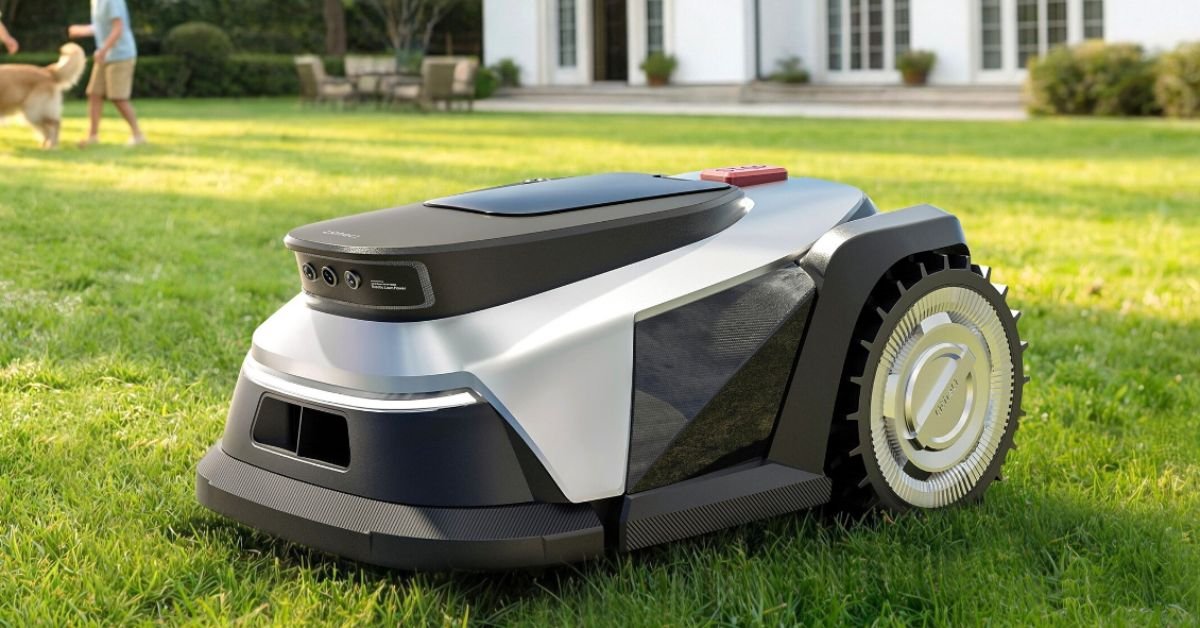
Litheli has announced the Skope 800, an AI robotic lawn mower that uses an AI-Vision camera system to automatically detect lawn boundaries and obstacles, eliminating manual perimeter setup and signalling a potential shift in the smart lawn care market.
At the core of the Litheli Skope 800 is its AI-Vision system, which relies on onboard cameras and computer vision rather than buried boundary wires. On its first run, the mower autonomously identifies the edges of a lawn and builds a digital map, allowing it to operate without physical guides.
The system also enables real-time obstacle detection, recognising pets, toys, garden furniture, and landscaping features to avoid collisions.
This approach improves both safety and efficiency, as the mower can dynamically reroute itself instead of stopping or getting stuck.
Positioned as a mid-to-high-tier model, the Skope 800 reflects Litheli’s strategy of pairing advanced automation with consumer-friendly design for hands-off operation.
Traditional robotic lawn mowers often require time-consuming perimeter wire installation, a process that can take hours and must be repeated when yard layouts change. Many models also struggle with limited obstacle avoidance, increasing the risk of damage or downtime.
By removing the need for physical wires, the Skope 800 offers a plug-and-play experience that adapts to seasonal yard changes.
Its AI system is designed to improve over time, making it particularly appealing to homeowners who want convenience without ongoing setup or maintenance hassles.
Most established competitors, including Husqvarna, John Deere, and Worx, still rely heavily on wire-based boundary systems.
Litheli’s AI-driven approach reduces setup friction, aligning with a broader industry move toward fully autonomous consumer robotics. Pricing is expected to land in the $2,000–$4,000 range.
The Litheli Skope 800 is expected to launch in select markets in 2026. While AI vision systems continue to evolve and are not flawless, the product highlights a clear trend toward smarter, more autonomous lawn care with minimal user intervention.